
- Chinese: Business Department 0539-8782638
- English: chau@dengzhuochem.com
- Chinese: Business Department 0539-8782638
- English: chau@dengzhuochem.com
The Heart of Industrial Hydrogen: SMR and WGS Catalysts
2026-05-20
Hydrogen plays a big role in modern industry. It helps make fertilizer. It refines crude oil into gasoline. It also produces many chemicals. More recently, hydrogen has become a clean fuel for trucks, ships, and power plants. But where does all this hydrogen come from? Over 95% of it comes from natural gas. The process uses two types of catalysts. They are called steam methane reforming (SMR) catalysts and water‑gas shift (WGS) catalysts. If you work with hydrogen production, you need to understand how these catalysts work.
Why We Need Two Catalysts
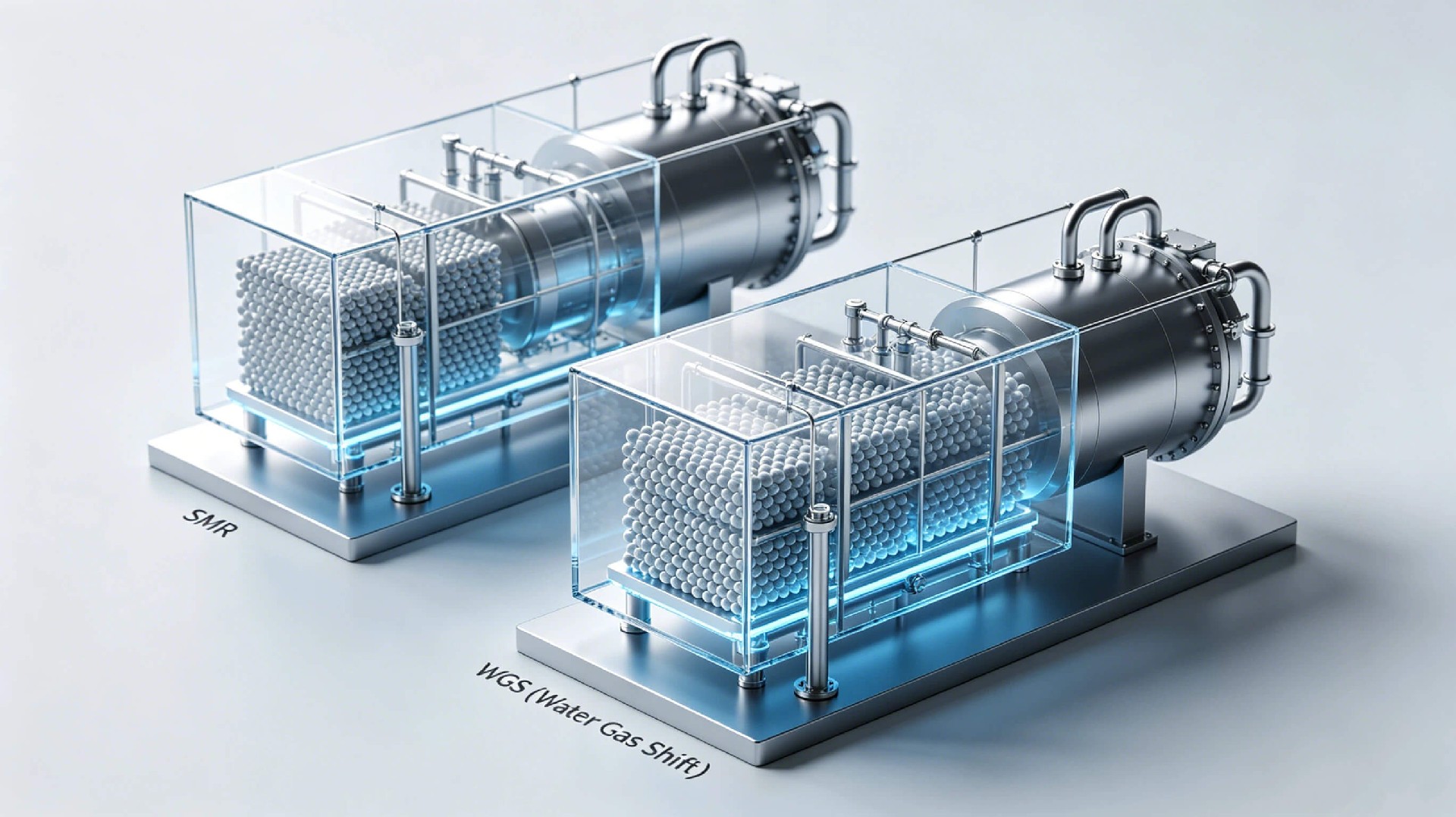
Making hydrogen from natural gas takes two steps. You cannot do it in one reactor.
The first step is steam methane reforming. Here, methane (the main part of natural gas) mixes with steam. The mixture passes over a catalyst at high heat. The temperature is usually 700 to 900°C. The catalyst is mostly nickel. It helps break methane molecules apart. The result is a gas mixture. It contains hydrogen, carbon monoxide, and some leftover steam. This reaction absorbs a lot of heat.
The second step is the water‑gas shift reaction. The gas from the reformer still has carbon monoxide (CO). CO can poison many downstream catalysts. It also wastes hydrogen that you could have made. In the shift reactor, engineers add more steam. The gas then passes over a different catalyst. This catalyst helps CO react with steam. The reaction makes extra hydrogen and carbon dioxide. This step can increase total hydrogen yield by 10 to 20 percent.
Together, these two catalytic stages turn methane and water into hydrogen and CO₂. No other method matches this combination of scale and low cost.
What Makes SMR Catalysts Special?
SMR catalysts must survive tough conditions. They face high temperatures, high steam pressure, and the risk of carbon buildup (coking). Most materials would fail quickly. Nickel works well because it is affordable, active, and fairly stable.
However, nickel catalysts are sensitive to poisons. Sulfur compounds in natural gas are a big problem. Even a few parts per million of sulfur can deactivate nickel almost instantly. That is why most SMR plants remove sulfur from the feed gas before it reaches the catalyst. Other poisons include chlorine, arsenic, and heavy metals. If the feed gas is clean, a good SMR catalyst can last three to five years before replacement.
Over time, even with clean gas, nickel particles grow larger. This is called sintering. When particles grow, they lose surface area. Steam can also cause nickel to evaporate and disappear. Modern catalyst makers add promoters like potassium or rare earth metals. These additives slow down sintering and improve resistance to coking.
WGS Catalysts: High Temperature and Low Temperature
The water‑gas shift reaction releases heat. To get the highest hydrogen yield, most plants use two shift reactors in a row. The first is high‑temperature shift (HTS). The second is low‑temperature shift (LTS).
High‑temperature shift catalysts run at 300 to 450°C. They are based on iron oxide (Fe₃O₄) with chromium oxide as a stabilizer. These catalysts are tough and tolerate some sulfur. They are also relatively cheap. They convert most of the carbon monoxide. But the exit gas still contains about 2‑3% CO. That is too much for many downstream processes.
Low‑temperature shift catalysts run at 180 to 250°C. They contain copper, zinc oxide, and alumina. Copper is very active at low temperatures. However, it is also fragile. High temperatures cause copper to sinter quickly. Sulfur or chloride poisons can destroy it. The LTS catalyst reduces CO to below 0.5%. In good systems, it can reach 0.1% CO. This high conversion is critical for hydrogen purity. It also protects sensitive catalysts like those used in ammonia synthesis.
Common Problems and Practical Fixes
Coking happens when solid carbon builds up on the catalyst. This can block pores, break pellets, and increase pressure drop. SMR catalysts face the highest risk when the steam‑to‑carbon ratio is too low. To prevent coking, operators maintain the correct ratio. They also use coke‑resistant catalyst formulations.
Poisoning kills catalysts slowly. Sulfur is the main enemy for SMR and LTS catalysts. HTS iron catalysts are more resistant but still degrade over time. The best defense is good feed purification. Many plants install a guard bed (for example, zinc oxide) to remove sulfur before the reformer.
Sintering occurs when the catalyst sees temperatures above its design limit. An upset in the reformer can send a hot spot through the bed. Once metal particles have agglomerated, the activity loss is permanent. Proper temperature control and quick shutdown during upsets are essential.
Why These Catalysts Still Dominate
New hydrogen methods like electrolysis are growing. But they remain more expensive than SMR in most regions. For large‑scale, low‑cost hydrogen, SMR and WGS will continue to lead for decades. This is especially true when plants add carbon capture to make blue hydrogen. Knowing how to select, operate, and protect these catalysts directly affects plant profitability and reliability.
Summary
SMR and WGS catalysts are the backbone of industrial hydrogen production. SMR catalysts, typically nickel‑based, crack methane and steam at high temperatures. WGS catalysts come in two types: iron‑based for high temperatures and copper‑based for low temperatures. They convert carbon monoxide into additional hydrogen. Each catalyst has its own strengths, weaknesses, and operating windows. For plant operators and engineers, managing coking, poisoning, and sintering leads to longer catalyst life and lower hydrogen cost.
<< Previous Page
Next Page >>

- Chinese: Business Department 0539-8782638
- English: chau@dengzhuochem.com
Shandong Dengzhuo Chemical Co.,Ltd
We are looking forward to serve you as soon as possible. Please don't hesitate to contact us at any time,anything you need, be free to contact us. Sitemap
 0539-8782638
 17686900930
 chau@dengzhuochem.com
